9:00 AM PDT
Hearing from Canada’s Blue Communities
Maude Barlow, Board Chair of Food & Water Watch, and Mary Grant, Public Water For All Campaign Director, introduce Blue Communities. Put your town or city on the map; pass local resolution to recognize the human right to safe, affordable, clean water for all and to sanitation; reject all forms of water privatization; promote water as a public trust and public service; phase out bottled water used in government buildings and municipal events. With 80 Blue Communities around the world, but only Northampton, MA and Los Angeles, CA, let’s put US communities on the map. Join Earth Democracy in this campaign.
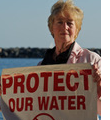 Maude Barlow is a Canadian activist, author, and recipient of many honorary degrees and awards. She chairs the board of Washington-based Food & Water Watch and Ottawa-based Blue Planet Project, a global initiative by the Council of Canadians working with partners around the world to achieve water justice based on the principles that water is a human right, a public trust, and part of the global commons. Maude co-founded the Council of Canadians and chaired its board for over three decades.
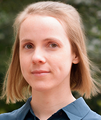 Mary Grant is the Public Water for All Campaign Director at Food & Water Watch. She oversees campaigns to support universal access to safe water in the United States by promoting responsible and affordable public provision of water and sewer service. She is a policy analyst on US water utility privatization. Food & Water Watch is a national nonprofit environmental organization that mobilizes regular people to build political power to move bold and uncompromised solutions to the most pressing food, water, and climate problems of our time.
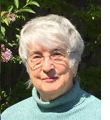 Nancy Price, the moderator, joined WILPF in 2002, first with Challenge Corporate Power/Assert the People’s Rights, then Save the Water Campaigns. Currently she is an At-Large Board Member and Earth Democracy Issue Committee Co-chair. In 2011 when “Save the Water” expanded as Earth Democracy, Nancy and the leadership team created campaign materials on the: human right to water, bottled water, environmental impacts of free trade agreements, Climate Justice+Women+Peace, Human Right to Safe Food, and Rights of Nature. Most recently, Earth Democracy has focused on the impact of war on the environment and helped create the militarypoisons.org project on contamination of water with PFAS and impact on public health. Find new campaigns, projects and actions on the website.
10:00 AM PDT
It All Runs Down Hill: The Price of Cheap Meat
This panel will discuss the nationwide movement against confined animal feeding operations, also known as factory farms. Activists in the Des Moines, Iowa, and Triangle North Carolina WILPF Branches and allied organizations will discuss the problems associated with factory farms and the campaigns to oppose them. Factory Farming creates a wide variety of problems, from economic impacts on rural communities, water and air pollution, increased greenhouse gas emissions, health problems, and poor treatment of animals. We will provide ways for WILPF members to oppose this system of agriculture, including advocating for legislation on the state and federal level, and getting involved in local governance.
 John Aspray is an Iowa organizer with the Factory Farm Team at Food & Water Watch and also chairs the Iowa Alliance for Responsible Agriculture, a statewide coalition working to promote ethical agriculture in Iowa and hold politicians accountable. Prior to joining Food & Water Watch, John was an organizer with the American Federation of Teachers and served as National Field Director of the United States Student Association when he was a student at Rutgers University.
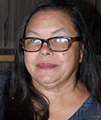 Donna Chavis currently serves as Senior Climate Campaigner with Friends of the Earth, US, and Founder/Convener of the Red Tailed Hawk Collective. She is part of the collective leadership team for the North Carolina Climate Justice Collective. Donna was a member of the Planning Committee of the First National People of Color Leadership Summit in 1991, which developed the Principles of Environmental Justice. She remains committed to those principles. She is also a member of the CAFO Roundtable.
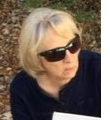 Sharon Donovan is a retired teacher who favors dark chocolate, has lived all over the world, and now fights powerful corporations destroying our planet. She is active in the Des Moines, Iowa, WILPF Branch.
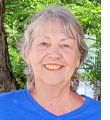 Jan Corderman speaks from experience when she says that there’s nothing better than growing up on a farm. But today’s farms are more “factory” than farm. That’s why she represents her WILPF Des Moines Branch on the Iowa Alliance for Responsible Ag’s Steering Committee.
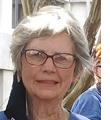 Emily Keel is a retired primary care physician assistant with a love for local food and all animals. She serves on the Triangle WILPF steering committee.
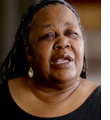 Naeema Muhammad has been the organizing co-director of NC Environmental Justice Network since 2013. In addition to organizing and advocacy, she is an educator to those not aware of the technology or toxicities. She co-authored many publications in community-based public health research. She is on the NC Department of Environmental Quality's Environmental Justice Advisory Board, which is one of only a few such boards in the country.
12:00 pm PDT
Uniting Communities for Environmental Justice: Radioactive Pollution Deadly In Any Space
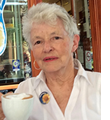 Robin Lloyd, panel moderator, is a member of CONPRO, the Burlington, VT, WILPF US branch, and co-chair of the Disarm/End War Committee. She is looking forward to the Congress and seeing her sisters again. For Robin, the last year has been such a desert—no opportunity to get together at the CSW or the conference on the Nuclear Non-Proliferation Treaty. She is excited about the scheduled exchanges with members and staff of International WILPF and is organizing a tête-à-tête with Director of Global Programs Maria Butler.
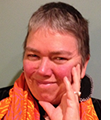 Mary Olson is founder and Director of the Gender and Radiation Impact Project since 2017. She served from 1991 to 2019 as Staff Biologist and Senior Radioactive Waste Policy Analyst at US-based Nuclear Information and Resource Service, a non-governmental organization. Olson’s work on radiation education led her to the question of whether biological sex is a factor in radiation harm. Her paper, “Atomic Radiation Is More Harmful to Women” (2011), was featured at the Vienna Conference on the Humanitarian Impacts of Nuclear Weapons (2014). She has presented at the European Union Gender Summit in London and the Low-Dose Radiation Conference.
 Leona Morgan (Diné/Navajo) is an indigenous community organizer and activist who has been fighting nuclear colonialism since 2007. Morgan works with the Nuclear Issues Study Group in New Mexico and is cofounder of the Nuclear Issues Studies Group and Diné No Nukes, which contributes to the Haul No! initiative.
 Tina Cordova is a sixth-generation New Mexican, born and raised in the small town of Tularosa. In 2005 Tina cofounded the Tularosa Basin Downwinders Consortium (TBDC). TBDC’s mission is to bring attention to the negative health effects suffered by innocent victims of the first nuclear blast on earth that took place at the Trinity site in South Central New Mexico. The goal is the passage of the Radiation Exposure Compensation Act Amendments to bring much needed health care coverage and compensation to those people of New Mexico suffering from the health effects of the Trinity test. Tina is a cancer survivor, having been diagnosed with thyroid cancer when she was 39 years old. See WILPF US 75th Anniversary of Trinity Test 2020 webinar.
 Helen Jaccard (She/Her) is a researcher, author, and speaker with a desire to bridge the gap between long-time activists and the public. Her primary focus is to bring about an end to all aspects of the nuclear era. She is the Project Manager of the Veterans For Peace anti-nuclear sailboat, Golden Rule, and a member of the WILPF Disarm Issue Committee. Veterans For Peace, Golden Rule Project Manager, 206-992-6364, www.vfpgoldenrule.org, Facebook.com/goldenrulepeaceboat
1:00 PM PDT
Changing the Intent and Purpose of Money -
In conversation, we will examine how our unseen beliefs work against health and prosperity, specifically, how our subconscious trust in rich white guys allows a parasitic monetary system to sap our strength minute by minute, enslave us, and destroy our habitat. We will then discuss exciting ways the W$D Committee is working to replace that system. We will compare proposals to replace that system with a healing, nurturing money system, specifically considering the history-based “just money” solution proposed in the National Emergency Employment Defense (NEED) Act.
 Marybeth Gardam attended Seton Hall University (NJ) and New School for Social Research (NYC). Her career began in advertising, fundraising (for nonprofits), and marketing (for Bell Labs). In 1984, in Macon Georgia, she helped set up a Migrant Farmworker Coalition, serving as Director of the Central Georgia Center for Peace & Justice. In 2001, relocated in Iowa, she founded Women for Peace Iowa, later joining WILPF US in Des Moines. She served on the WILPF US Board of Directors for three years and is Chair of WILPF’s national Women, Money, and Democracy Committee, partnering with An Economy of Our Own.
 Mary Sanderson re-joined the Women, Money, and Democracy Committee in 2018. She grew up on a Wisconsin farm at a time when the monetary system and government policy converged to push small holders off the land. Mary always wondered why peace and justice could never get traction if great majorities always want it. Her puzzle came together in 2017 when she learned that banks create and allocate all the “money” we use. Since 2019 she serves as a director for Alliance For Just Money.
 Dorothy Van Soest is the current WILPF liaison to the Poor People’s Campaign, a member of the Women, Money and Democracy Committee, and a member of the Washington State Poor People’s Campaign coordinating committee. She is Professor Emerita and former dean at the University of Washington, and an educator, activist, and author of several award winning novels with a heart for justice. www.dorothyvansoest.com
2:00 PM PDT
Climate Change of Costa Rica
 Aimará Espinoza Ulate is a forestry engineer and has a Master’s in Environmental Law. Worked 21 years at the Ministry of Environment, Department of National System of Conservation Areas. Experience doing community work, with international funding for the use and management of biodiversity. Survivor of domestic violence and sexual and labor harassment.
 Adilia Caravaca is Costa Rican by birth, internationalist by heart. Active mostly in the areas of women’s rights, human rights, food security, environment protection, Indigenous peoples, and community development. Lawyer, mother of two girls. Involved in WILPF since 1983, being its International President (2011-15). Earned a Master’s Degree in Gender and Peace Building at the University for Peace (2004). Co-founder and member of the National Committee for Decent Housing, which put the topic on the public agenda, a movement that contributed to enact legislation and programs to make housing accessible to low-income families. Litigation, consulting, activism, and some gardening are part of her current life, which provide excitement and challenges to discuss and share with friends
 Mary Hanson Harrison is the current WILPF US Congress Coordinator and WILPF US past president (2014-2019). She brings not only an academic career but also a policy researcher and hands-on activist with and for nonprofit peace/feminist orientated organizations. She convened and participated in several presentations on ecofeminism and the necessity of a revolution in US agriculture and food systems: in The Hague, at the UN Commission on the Status of Women, and the WILPF International Congress – Ghana, and past WILPF US congresses.
 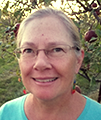 Patti Naylor farms with her husband George in West Central Iowa, growing organic corn, soybeans, oats, hay, cider apples, and chickens. Patti speaks and writes about agriculture, farm justice, and the principles of food sovereignty. Her focus is on organic production and agroecological principles in addressing the multiple environmental and social crises we face. She participated in a WILPF side event at the United Nations Commission on the Status of Women in 2018 (CSW62) in NYC on industrial agriculture’s negative impact on rural women. She is a board member of Wisconsin-based Family Farm Defenders, a member organization of National Family Farm Coalition and US Food Sovereignty Alliance. She also serves on the boards of the
 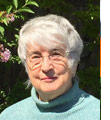 Nancy Price, the moderator, joined WILPF in 2002, first with Challenge Corporate Power/Assert the People’s Rights, then Save the Water Campaigns. Currently she is an At-Large Board Member and Earth Democracy Issue Committee Co-chair. In 2011 when “Save the Water” expanded as Earth Democracy, Nancy and the leadership team created campaign materials on the: human right to water, bottled water, environmental impacts of free trade agreements, Climate Justice+Women+Peace, Human Right to Safe Food, and Rights of Nature. Most recently, Earth Democracy has focused on the impact of war on the environment and helped create the
 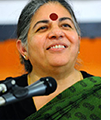 Vandana Shiva. After completing her Ph. D. in the foundations of quantum theory, in 1984 Dr. Vandana Shiva was compelled to look at agriculture when farmers in India rose to protest the Green Revolution and the catastrophic gas leak at the Union Carbide pesticide plant in Bhopal that killed thousands of people. Since then, Dr. Shiva has practiced and promoted an agriculture of peace, non-violence, and independent “free” farming. Dr. Shiva started Navdanya to save seeds from patenting and genetic engineering. In her recent book, Oneness vs 1%, she outlines how “Big Tech” is now hijacking agriculture to continue the violent path. She will share what we can do to protect the earth, farmers’ livelihoods, people’s health and people’s freedoms for present and future generations.
  Dr. Nancy Glock-Grueneich is a member of Santa Cruz WILPF and host of the community TV/YouTube Series, The Future We Need and How to Get It.
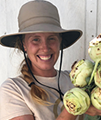 Jessie MacInnis is a small-scale, first generation farmer based in unceded Mi’kmaw territory (Nova Scotia), Canada. She and her sister grow vegetables and cut flowers for a farmers market and Community Supported Agriculture (CSA) program. She is currently the Youth Vice-President and Chair of the International Programs Committee of the National Farmers Union. Jessie is very active in La Via Campesina, particularly working to promote the UN Declaration on the Rights of Peasants and Other People Working in Rural Areas (UNDROP) and participating in the youth articulation, and is also a member of the Committee for World Food Security’s Civil Society Mechanism youth working group. She is currently completing a Master of Human Rights program, where her research has focused on the applicability of UNDROP to the Canadian context.
 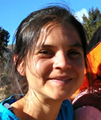 Maywa Montenegro is Assistant Professor in Environmental Studies at the University of California, Santa Cruz. She draws on political ecology, science and technology studies, and rural political economy to look broadly at knowledge politics in struggles over food systems. Specifically, she’s interested in connections between agrobiodiversity, Indigenous knowledges, and food security and nutrition; debates over gene editing and digitalization in food systems; and the role of scholar-activism in advancing agroecology and food sovereignty. She is a founding member of the Agroecology-Research Action Collective, an Associate Editor for the journal Agroecology and Sustainable Food Systems, and on the editorial board of the journal Agriculture & Human Values.
 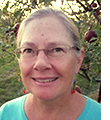 Patti Naylor farms with her husband George in West Central Iowa, growing organic corn, soybeans, oats, hay, cider apples, and chickens. Patti speaks and writes about agriculture, farm justice, and the principles of food sovereignty. Her focus is on organic production and agroecological principles in addressing the multiple environmental and social crises we face. She participated in a WILPF side event at the United Nations Commission on the Status of Women in 2018 (CSW62) in NYC on industrial agriculture’s negative impact on rural women. She is a board member of Wisconsin-based Family Farm Defenders, a member organization of National Family Farm Coalition and US Food Sovereignty Alliance. She also serves on the boards of the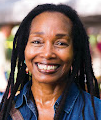
 Nettie Wiebe farms in Saskatchewan, Canada, growing organic grains and pulse crops as well as raising cattle. She served in elected leadership positions of the National Farmers Union for ten years and was the first woman to lead a national farm organization in Canada. The NFU was a founding member of the global Via Campesina movement where Nettie played a leadership role as a member of the International Coordinating Committee from 1996 to 2004. She continues to work internationally, representing social movements at the UN Committee on World Food Security in Rome.
 Cindy Domingo, a long-time social activist has used her skills as a writer, speaker, organizer, and community bridge builder to create fundamental change and to build international solidarity between her communities and working people around the world. Currently, Cindy is Co-chair of WILPF's Cuba and the Bolivarian Alliance Issues Committee and Chair of US Women and Cuba Collaboration. Over the past 17 months, she has been in the leadership of the International US-Cuba Normalization Conference Coalition and the Saving Lives Campaign. She has been a member of WILPF since the 1980s and served on the National Board and various WILPF committees.
 Kathryn Hall-Trujillo, MPH, is an Ashoka Fellow and Founder of the Birthing Project USA. In addition, she is an adjunct faculty at Charles R. Drew University of Medicine and Science Urban Public Health and Scholar of the Cuba Health Care System.
  Ambassador Lianys Torres Rivera, Chargé d’Affaires a.i., Embassy of Cuba in Washington D.C., United States. From 2015 to 2017 she was part of the Cuban delegation that met with the US Government authorities to discuss the re-establishment of diplomatic relations and the re-opening of embassies in both countries. She was also part of the Cuba-US Bilateral Commission, the Cuba-US Bilateral Economic Dialogue as well as other Cuba-US bilateral dialogues on regulatory issues, human rights, traffic in persons, the establishment of direct postal services, renewable energy and banking issues.
 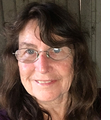 Odile Hugonot-Haber, co-chair of MEPJAC, will speak on US weapons sales to the Middle East. She came to the US from France and was a Registered Nurse for about 30 years. As an activist she was at first part of Women In Black, a feminist international movement against war. She joined WILPF US in 1993 and has been part of the Middle East Committee, and on and off the chair of the Ann Arbor/Ypsilanti branch in Michigan. She has travelled many times to Israel and Palestine. She serves on the board of World Beyond War, writes articles about war and peace, and is a member of the Disarm issue committee. She focuses on the Weapons of Mass Destruction Free Zone in the M.E. In San Francisco with WILPF, in a reunion she was introduced to the feminist foreign policy initiated by Sweden.
 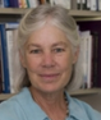 Pat Hynes (She/Her) is a retired environmental engineer and professor of environmental health from Boston University School of Public Health, where she co-directed community-based environmental justice projects in Boston Public Housing and diverse, low-income neighborhoods in Boston. For her work, she has received many regional and national awards. She works, writes and speaks on peace, social justice, women’s equality, and environmental justice issues. She directed the Traprock Center for Peace and Justice in western Massachusetts from 2010 to 2021. The impact of US militarism on countries and people, especially women, across the world, is a major focus of her writing, speaking, and activism. She is an at-large member of WILPF and has partnered with WILPF Sierra Leone and WILPF Cameroon since the WILPF 2018 Congress in Ghana.
 Orly Benaroch Light is an entrepreneur and business development consultant. She is an activist for women's achievement and empowerment, and a human rights defender. She is also a speaker, children's book author, food enthusiast, and a mom.
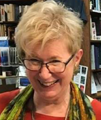 Rickey Gard Diamond, the panel moderator, is the founding organizer of the new educational alliance, AEOO, working in partnership with WILPF US. A journalist and fiction writer, Rickey has long focused on money, politics, and cultural change. She taught writing and literature, feminist, and media studies at Vermont College for over 20 years. In 2011 she was awarded a National Newspaper Association award for her article series, “An Economy of Our Own”; in 2014 she won a Hedgebrook fellowship for work on Screwnomics: How the Economy Works against Women and Real Ways to Make Lasting Change. Rickey’s column at Ms. Magazine, “Women Unscrewing Screwnomics,” can be found online; her novel, Second Sight, from Calyx Books, and her collection of short stories, Whole Worlds Could Pass Away from Rootstock Publishing can be ordered at your local bookstore and online. (photo courtesy of AEOO)
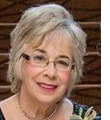 Marybeth Gardam, panel co-moderator, set up a Farmworker Coalition in Georgia and served as the director of Central Georgia Peace Center. She later became active with WILPF US in Iowa and now sits on the advisory board of An Economy of Our Own, while also heading WILPF US’s issue committee, Women, Money and Democracy. This committee has produced a widely taught course on corporate personhood, still available online, and recently created a sourcebook on public banking and activism. Its text will be used in a new Public Banking Learning Circle that begins Aug. 27, organized by WILPF US, An Economy of Our Own, and the Public Banking Institute.
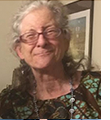 Darien De Lu, WILPF US President and Congress Tech Team Core Member is a peace, justice, and Latin America solidarity activist in the Sacramento branch. She writes her California ballot guide (for over 20 years) plus political and labor songs – and sings frequently! Prior to retiring, she bicycle-commuted for twelve years to her California state jobs, addressing substance use and co-occurring disorders. She and her husband bike, especially to the local food co-op. Darien speaks several languages and has traveled extensively. An activist for over fifty years, Darien has been a consensus process and nonviolence trainer. Her civil disobedience direct actions and subsequent jail time inform her activism.
 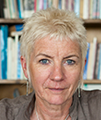 Madeleine Rees
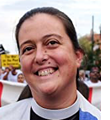 Rev. Dr. Liz Theoharis, Co-Chair of the
 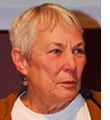 Mary Bricker-Jenkins is the former WILPF liaison to the Poor People’s Campaign, is on the Cuba and Bolivarian Alliance Issue Committee, the CEDAW Issue Committee, and a former member of the Board. She is Professor Emerita of Social Work at Temple University and has worked for years with the National Welfare Rights Union (currently on the Board) and the national Poor People's Economic Human Rights Campaign.
 Rev. Rowan Fairgrove, EPs, is a member of the WILPF San Jose Branch and sings with the Raging Grannies. She is a volunteer with the Bay Area and California Poor People's Campaign as a member of the Faith Leaders Working Group (BA/CA), the Bay Area Steering Committee, the Speaker Training Working Group (CA), and the Accessibility WG (CA). She is also a member of the national Prophetic Council. She attended the 2019 PPC Moral Congress representing WILPF San Jose.
 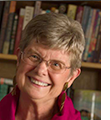 Dorothy Van Soest is the current WILPF liaison to the Poor People’s Campaign, a member of the Women, Money and Democracy Committee, and a member of the Washington State Poor People’s Campaign coordinating committee. She is Professor Emerita and former dean at the University of Washington, and an educator, activist, and author of several award winning novels with a heart for justice.
 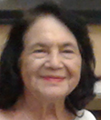 Dolores Huerta is an iconic figure of effective feminist and social and economic justice advocacy and organizing… Co-Founder with Cesar Chavez of the National Farmworkers Association, now the United Farm Workers. Dolores Huerta’s experience in farm worker and other organizing and legislative advocacy extends over more than half a century, and she will offer her views.
 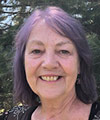 Jan Corderman works with local and WILPF US committees to bring the Palestinian narrative into the public discourse. She served as a union organizer for over 30 years prior to her retirement. Jan has served as the WILPF US Treasurer since 2017.
 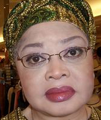 Theresa El-Amin is the founder of the Southern Anti-Racism Network, 1998 to present. Theresa says her "aha moment" was meeting Stokely Carmichael (Kwame Ture) in Jean Wiley's classroom at Tuskegee in 1966. She joined the Student Nonviolent Coordinating Committee (SNCC) where she volunteered at the Atlanta SNCC office with the support of John Lewis, SNCC Chairman before Stokely Carmichael. She worked at the phone company for nearly 20 years. She was active in CWA Local 3204. Became a union organizer for SEIU in 1986. She's been on the Freedom Trail for 55 years.
  Jean Hays, Chair of the Legislative Committee of Fresno Branch WILPF, as well as the Earth Democracy Committee chair; she is also on the WILPF-US Earth Democracy Leadership Team. She has been a member of WILPF for about 16 years, and was president of the Fresno branch. She is also the keyboard player for the Raging Grannies, and every month she produces the radio show WILPF - Stir It Up.
 Leni Villagomez Reeves, M.D. is a former UFW volunteer who attended UC Berkeley and UCSF, then did pediatric emergency medicine for many years. She is active in WILPF, both in the Fresno Branch and nationally, co-chairing the Cuba and the Bolivarian Alliance Committee, and with the Pastors for Peace Caravan to Cuba and the Saving Lives Campaign. In non-pandemic years, she spends about 2 1/2 months each year in Cuba, where she has close ties.
 Judith Sheldon is a Peace Camp director, arts educator, and adjunct faculty at Wayne State University, teaching “Integrating the Arts into Elementary Classrooms” in the School of Education. Secretary in the Detroit Branch of WILPF. Always a dancer, becoming a musician.
 Nikki Abeleda, (She/They) is a First-Generation Queer Filipinx on Nisenan and Miwok land, also known as Sacramento, CA. She is a community organizer, clinical social worker, and therapist at a Federally Qualified Health Center (FQHC). She is an advocate for mental health, social justice, and Black Indigenous and People of Color issues, particularly among the LGBTQIA community and all marginalized communities. Nikki serves as WILPF U.S.’s Field Facilitator for the Inside & Out Initiative to help six WILPF branches with capacity building, reformalization, and restructuring and works on the Congress organizing team on marketing and communications.
 Janice Hawkins is a member of the Leadership Team of the Des Moines Branch, the DISARM Committee, the “Anti-Racism Team” that facilitated a seven-week study of the book Uprooting Racism by Paul Kivel, and is the primary composer of WILPF's “Resource List for Dismantling White Supremacy.” Locally she serves on the Racial Justice Team of a community action group and is a cofounder of “Pachamama Alliance - Iowa,” a community of those interested in learning, personally and collectively, ways to bring forth changes that result in an environmentally sustainable, spiritually fulfilling, and socially just human presence on this planet.
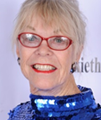 Anne Hoiberg served for 25 years as a Research Psychologist for the federal government; her curriculum vita includes two books and more than 130 scientific articles, book chapters, reports, and presentations. She volunteered as an election supervisor for the U.S. Department of State (eight missions) and hosted a television series on peace and women’s rights. She is a past president of three organizations and currently serves as Board President of the Women's Museum of California and four other organizations. She was inducted into the San Diego County Women's Hall of Fame in 2012. She is a freelance writer and speaker.
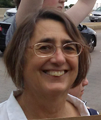 Virginia Pratt is a Bostonian who has advocated for peace and justice in her professional work and social activism for over 30 years. An active WILPF member for 20 plus years, she was attracted to WILPF as an international organization opposing war while promoting human rights and environmental and economic justice. Virginia participated in four of WILPF’s international congresses and two national congresses along with branch activities. She currently works as a licensed social worker in Boston where she applies her 40 years of human service experience. When not working, she can be found using food from her organic farm share to make simple meals, walking in her neighborhood, swimming at a local beach, or riding her bike.
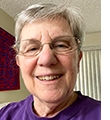 Ellen Schwartz joined WILPF in 1969 and was the youngest member of the San Jose branch. Now she is nearly the oldest member of the Sacramento branch and can’t figure out how that happened. In between, she has served as branch chair, branch newsletter editor, chair of the WILPF US Policy Committee, WILPF Western Region newsletter editor, occasional Triennial Congress newsletter editor, Congress Registrar, chair of Congress Committee, US Section WILPF Treasurer for half a term (finishing an unfinished term), and US Section WILPF Program Chair (finishing another half term).
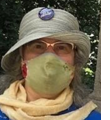 Tina Shelton has been a member of WILPF since after 9/11 and an advocate for those with disabilities for longer. She is willing to develop a thick skin to make the world a better place, is a parent of three, one who strives for rational thinking in personal and professional work, and is constantly inspired by elder women activists. Resides outside Philadelphia.
 Sabreena Britt has been a member of the Sacramento Branch in California since 2011, when she was seeking out a network of activists and volunteer opportunities after her move to Sacramento from Southern California. She grew up in San Diego, learning activist work as a youth through Girl Scouts and clubs in college. She has a 6-year-old daughter, for whom she wants to create a better world. In her professional life, she is a Volunteer Coordinator for an environmental non-profit and has been teaching and coordinating environmental science programs for the past 17 years.
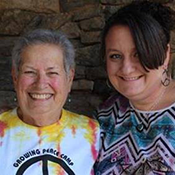 Millie Livingston (pictured with Natalie Zapata) joined WILPF in 1967 as a member of the San Francisco Branch. She began as Branch Chair and Region 1 Treasurer. She focused on peace and community involvement there and in the Sierra Foothills. In 1988 she moved to Auburn, CA. Discussions at a conference initiated Peace Camp. Her goal shifted to making Auburn environmentally aware and build peace. From 1989 to1999 she was active in Sacramento as well. Millee has received many awards: Certificate of Appreciation for the Auburn Children’s Peace Camp from the Placer Ecumenical Committee for Social Justice, WILPF Lifetime Membership Award, Placer County Seniors of the Year Award, Recognition of Outstanding Achievements in Placer County, Eleanor Roosevelt Award for Peace, Dove Award for Women’s National Film and Television Showcase, and Growing Peace Camp Award. A highlight for her was attending the Hague Appeal for Peace in the Netherlands, May 1999, where Archbishop Desmond TuTu said, “Every village in the world should have one of your Peace Camps.”
 Roberta Ahlquist is a retired antiracist professor, social justice activist, low-income housing advocate, mother, grandmother, and Raging Granny. She has two co-edited books on public schooling: Assault on Kids and Assault on Kids and Teachers, published by Peter Lang.
 Beverley Fitzpatrick is a widow, mother, grandmother, retired teacher turned homeless advocate, and social activist. She is a founding member of Wings Advocacy Fresno and a Board member, also on the Board of Directors of the Fresno Eco-Village Project and on the Oversight Committee for the Dakota Eco Garden, President of Peace Fresno, and a contributing member of WILPF.
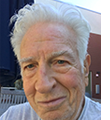 Chuck Jagoda is only the second male member of the Peninsula Branch of WILPF. Linus Pauling was the other. He accompanied his wife Ava Helen Pauling on her long career of peace activism as a WILPF member. Linus Pauling was the second recipient of two Nobel prizes. Marie Curie was the first. I started my activism as a missionary teacher in Kingston, Jamaica. I've been a special ed teacher in NYC and taught students from all over the world. I now focus on homeless and housing issues. I am very grateful to and in deep admiration of the activists of WILPF for their powerful work over the last century. If humans get to live out this century, it will be because of the unceasing work of WILPF and other peace activists.

 In offering the very low $30 registration rate, WILPF is giving a chance to people of all kinds to learn more about WILPF activism. You, WILPF members who’ve never attended a Congress, this is your opportunity to find out about the wider world of WILPF!